

Tracking & Monitoring of Asset Deployments at Retail outlets and dealers
The core of AI and data intelligence currently revolves around three primary pillars that allow businesses to move from descriptive "what happened" reports to prescriptive "what should we do" actions.
2025 marks the rise of "AI Agents" that do more than just answer questions. Unlike traditional bots, these agents can independently plan, reason, and execute multi-step tasks across different software platforms—such as managing a full supply chain reorder or handling complex customer support cases from start to finish.
Organizations are now using these two branches in tandem. Predictive AI analyzes historical patterns to forecast outcomes (like sales trends or equipment failure), while Generative AI acts on those insights to create content (like personalized marketing emails or synthetic data for testing).
To power these models, enterprises utilize "data fabrics" that break down silos. This architecture provides high-quality, governed, and actionable data in real-time, ensuring that AI models are making decisions based on the most current information rather than outdated batches.

Content in 2025 is no longer static; it is hyper-personalized and multimodal, generated and distributed at a scale previously impossible for human teams.
AI uses deep customer data—including past purchases, click behavior, and even sentiment analysis—to create individualized product detail pages and marketing communications for every single user.
Generative tools are now embedded directly into workflows to produce everything from high-SEO blogs and social media kits to high-quality product imagery and videos. This allows brands to test hundreds of creative variants simultaneously to see what converts best.
Enterprises are using Retrieval-Augmented Generation (RAG) to turn internal documents, PDFs, and policies into "chat-ready" knowledge bases. Employees can ask an internal AI agent questions about complex company data and receive accurate, cited answers instantly.
The integration of data intelligence into 2025 business models provides several distinct competitive advantages:
Automation of routine data entry and analysis has led to significant productivity gains, with many enterprises reporting 20–40% improvements in task-level efficiency.
Leaders now make choices backed by real-time anomaly detection and predictive forecasting, reducing the risk of human bias or intuition-based errors.
AI-assisted development tools allow teams to prototype and launch new software or product features faster than ever, drastically shortening the time-to-market.
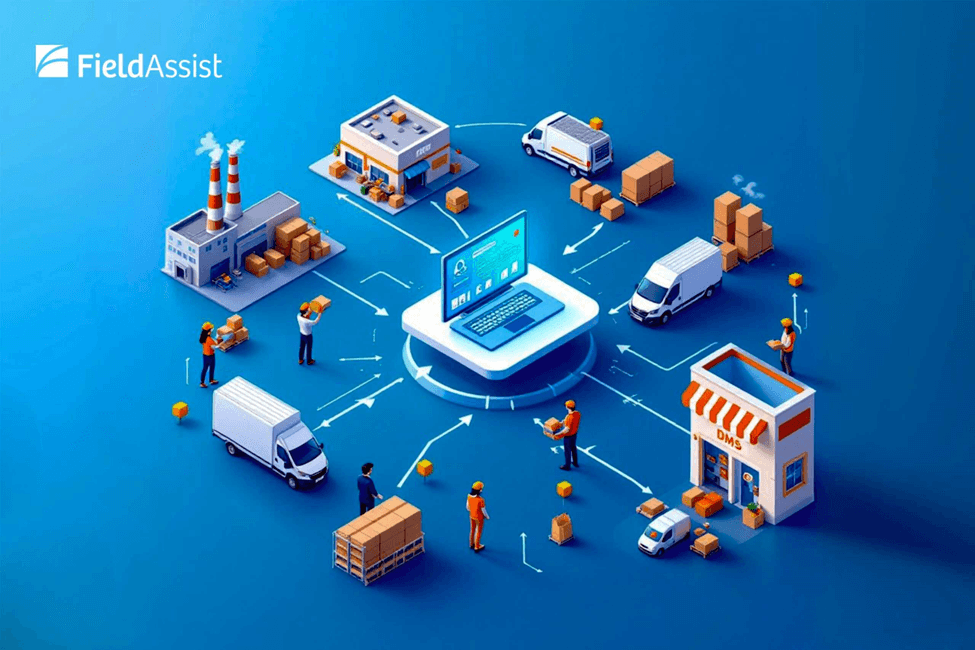
Discover the top challenges facing the distribution industry and effective ways to overcome them using modern technology solutions.
READ MORE
In the dynamic landscape of Consumer Packaged Goods (CPG) companies, having a robust DMS is crucial for scaling and efficiency.
READ MORE
Explore our comprehensive guide to Distribution Management Systems (DMS), covering features, benefits, and implementation strategies.
READ MORE
Discover the top challenges facing the distribution industry and effective ways to overcome them using modern technology solutions.
READ MORE
Achieve Sales growth & secondary sales visibility through Heera’s Distribution Management Solutions
Read More
Single platform that captures market demand, manages merchandising, journey planning & tracking for salesforce in real time.
Read More
Discover new RTM (Route-to-market) and directly communicate with your retailers efficiently.
Read More
Tracking & Monitoring of Asset Deployments at Retail outlets and dealers with precision.
Read More
Expand your rural sales channels to match the pace of rural economic growth and reach.
Read MoreLooking for a First-Class Distribution Solution?